Commercial News: Spinach-Derived Peptide Targets Citrus Greening
By: Crystal Carter
A discovery from Texas A&M AgriLife researchers is moving closer to widespread commercial use as a new tool against citrus greening, one of the industry’s most devastating diseases.
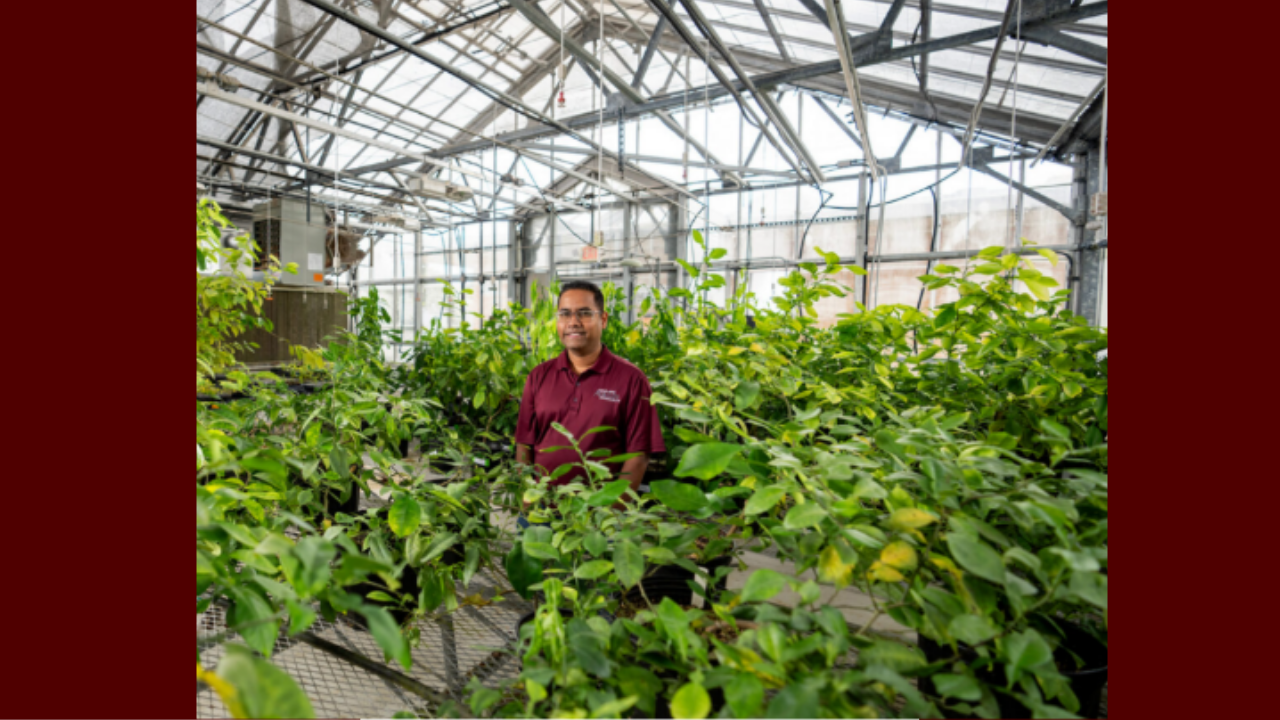
Led by Dr. Kranthi Mandadi, center director and professor in the Texas A&M Department of Plant Pathology and Microbiology, researchers developed a treatment using a naturally occurring spinach defensin peptide to strengthen citrus trees’ defenses against citrus greening, also known as Huanglongbing (HLB). Research has demonstrated improvements in tree health, fruit production and quality.
A significant milestone for the technology is its registration with the U.S. Environmental Protection Agency (EPA) under the Federal Insecticide, Fungicide, and Rodenticide Act (FIFRA). The registration allows the spinach defensin-based therapy product to be sold commercially without a tolerance limit, reflecting years of safety data gathered through the research partnership.
Protected by intellectual property owned by The Texas A&M University System, the technology demonstrates the path from research discovery and intellectual property protection to regulatory approval and commercialization, ultimately putting innovation into the hands of growers who can benefit from it.
Learn how Texas A&M research is advancing a new approach to protecting citrus production. Read the Texas A&M AgriLife article.