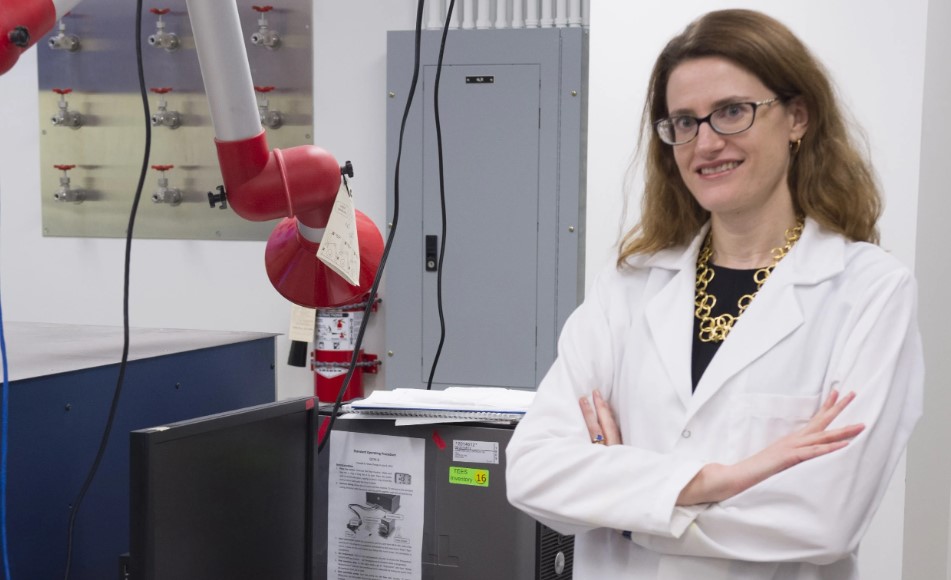
Innovative Battery Electrode Technology Supports Faster Charging and Reduced Weight
By: Crystal Carter, Ed.D.
Texas A&M University researchers are advancing the future of energy storage with a new battery technology designed to do more while using less space and weight. The Structural Organic Battery Electrode, developed by lead inventor Dr. Jodie Lutkenhaus and her research team, combines energy storage capabilities with structural functionality, creating a material that can both power a system and contribute to the physical structure of the device it supports.
The technology uses a redox-active polymer layered onto carbon fiber fabric, resulting in an electrode capable of rapid charging while maintaining mechanical durability. During testing, the electrode achieved more than 80% charge in approximately 2.4 minutes at room temperature and demonstrated operation in temperatures as low as -40°C. This combination of fast charging performance and structural resilience highlights the technology’s potential for use in demanding environments.
By integrating structural support with energy storage, this innovation could help reduce the overall weight and space traditionally required for batteries in systems such as drones, aircraft, electrified transportation platforms, and consumer electronics. The technology also offers a pathway toward reducing reliance on conventional battery materials such as cobalt, nickel, and manganese while still supporting high-performance energy storage.
As industries continue seeking lighter, more efficient, and more sustainable energy solutions, technologies like the Structural Organic Battery Electrode demonstrate how Texas A&M researchers are contributing to the next generation of advanced materials and electrification technologies.
To learn more about this technology or discuss licensing opportunities, contact Shyamala Rajagopalan, Senior Licensing Manager. Additional details about the technology are available online, along with other innovations currently available through Texas A&M Innovation.